

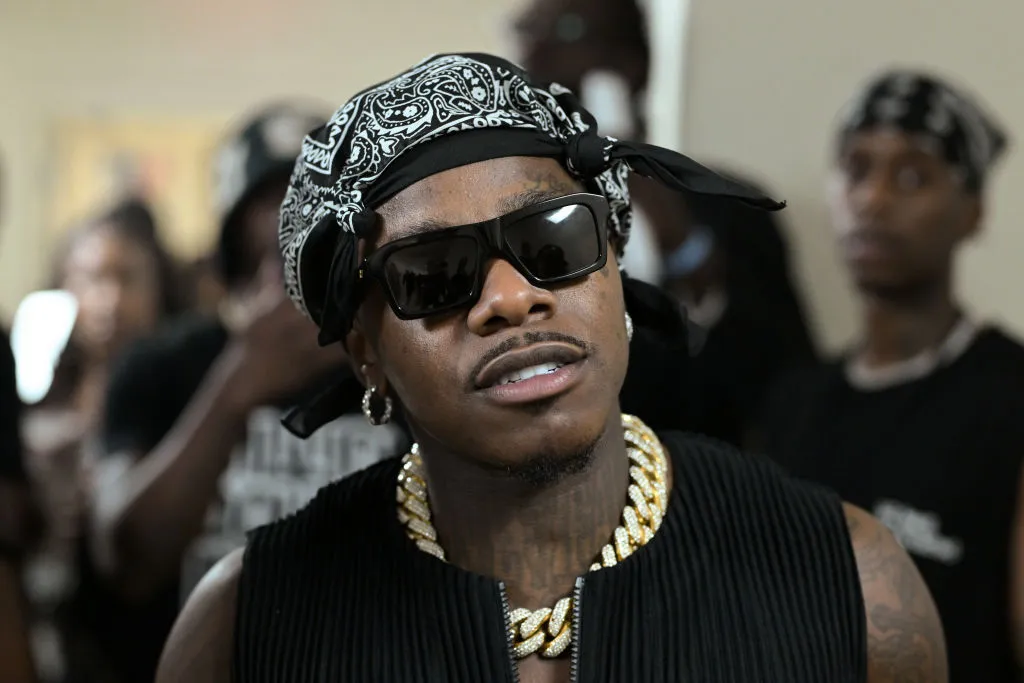
DaBaby is back in the headlines—but this time, not just for his music. The rapper recently met with Mecklenburg County Sheriff Garry McFadden following a firestorm over his September music video, which dramatized the stabbing death of Ukrainian refugee Iryna Zarutska. While the video sparked widespread backlash for its controversial depiction, the encounter with local authorities has added a surprising twist to the story.
🎥 The Controversial Video
DaBaby’s song, titled “SAVE ME,” recreated the tragic stabbing of Zarutska aboard a Charlotte train. In the video, he dramatizes the event, intervening in an attempted murder, before ending with a screenshot of a GoFundMe page for Zarutska’s family, which has raised over $471,000.
While DaBaby framed the project as a tribute, many viewers criticized the video for exploiting a real-life tragedy for entertainment, sparking debates about ethics, artistic expression, and the responsibility of artists when portraying sensitive events.
Critics argued that dramatizing the murder risked trivializing the trauma experienced by Zarutska’s family and community.
Adding to the controversy, Charlotte Area Transit System (CATS) confirmed that DaBaby’s team filmed without permission on the city’s light rail, leading to their removal. The clash highlighted the complexities artists face when merging real-world tragedies with public spaces and cinematic storytelling.
🤝 Meeting with Sheriff McFadden
Despite the backlash, DaBaby’s recent meeting with Sheriff Garry McFadden has drawn attention for its unexpected tone. A photo posted to Instagram shows the rapper flashing a peace sign alongside McFadden, with the caption:
“Yesterday, Sheriff McFadden sat down with DaBaby to discuss important issues and potential collaborations. Stay tuned to what’s cooking up.”
Though specifics remain undisclosed, speculation suggests that the discussion may have involved community safety initiatives, local programs, and collaborative opportunities between the rapper and the sheriff’s office.
The casual demeanor of the photo surprised many, especially given the intensity of criticism surrounding the “SAVE ME” video.
⚖️ Public and Ethical Debate
DaBaby’s tribute reignited conversations about the fine line between artistic freedom and ethical responsibility. On one hand, the video included a charitable element—raising funds for Zarutska’s family. On the other, critics argued that using a violent incident as a narrative device could be insensitive and triggering for those affected by the tragedy.
Social media reactions have been polarizing. Fans of DaBaby praised his intent to honor the victim, while others accused him of capitalizing on grief for views and engagement. The debate touches on larger questions facing the entertainment industry:
- How far can artists go when depicting real-life events?
- When does a tribute cross the line into exploitation?
- Should local authorities and institutions have a role in regulating content filmed in public spaces?
DaBaby’s team emphasized that the GoFundMe inclusion was meant to provide tangible support, rather than glamorize the crime.
🌐 Online Reactions
The video and subsequent sheriff meeting sparked a flurry of commentary online:
- One user on X wrote: “I get the tribute, but filming it like a movie? That’s a lot. Respect the family’s grief.”
- Another commented: “DaBaby just turned a tragedy into content. Not cool.”
- A third fan added: “At least the GoFundMe money is going to the right place. Still messy, though.”
The discussion reflects a growing tension between viral entertainment and social responsibility, particularly in cases involving real-life victims.
💡 Broader Implications for Artists
DaBaby’s experience underscores the challenges artists face when tackling sensitive topics. The incident with CATS, combined with public scrutiny, demonstrates the need for careful planning, permissions, and ethical considerations when filming in public spaces.

Moreover, the sheriff meeting hints at an unconventional approach to crisis management. Rather than being met with formal reprimand, DaBaby engaged directly with local law enforcement—possibly opening doors for collaboration and constructive dialogue.
“It’s rare to see an artist work with authorities after controversy like this,” notes one cultural commentator. “This could be a model for community engagement moving forward.”
🏙️ Charlotte Context
Charlotte has been thrust into the national spotlight due to the video. Local authorities had to respond not only to the ethical concerns but also to operational and safety issues stemming from filming on the light rail without permits.
The meeting with Sheriff McFadden may indicate a move toward reconciliation and proactive collaboration, potentially involving:
- Public safety campaigns
- Community outreach programs
- Partnerships addressing youth engagement and local arts initiatives
By working together, both parties may turn a controversy into an opportunity for positive impact in Charlotte.
🔮 What’s Next for DaBaby?
While the rapper continues to face criticism online, his engagement with law enforcement could redefine public perception. Moving forward, DaBaby may leverage this encounter to demonstrate responsibility, community involvement, and transparency in his projects.
The situation also serves as a case study for the entertainment industry, highlighting how sensitive material must be handled with care while balancing creative expression and ethical responsibility.
Fans and critics alike will be watching closely to see whether DaBaby continues this dialogue with authorities, and whether future projects are approached with heightened awareness of community impact.
📝 Bottom Line
DaBaby’s controversial music video sparked both outrage and dialogue over ethics, artistry, and public space use. The rapper’s meeting with Charlotte Sheriff Garry McFadden adds a surprising twist, signaling potential collaboration and a shift toward responsible engagement.
While the debate over the “SAVE ME” video continues online, this incident shows that even amidst controversy, artists and authorities can find common ground for discussion and positive outcomes—a rare example of bridging creative freedom with community responsibility.