

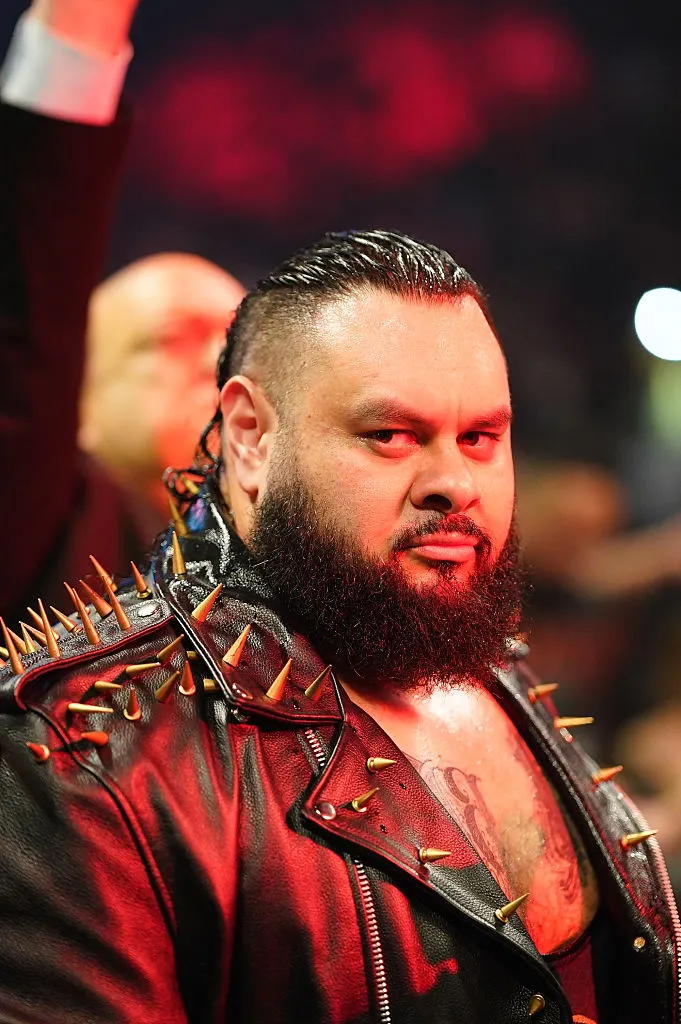
WWE superstar Bronson Reed made waves across social media on December 22, delivering a nod to hip-hop history that fans couldn’t ignore.
The Australian powerhouse shared a striking photo of himself in a multi-colored Coogi sweater and dark sunglasses, casually counting stacks of $100 bills. His caption was simple—but loaded with meaning: “They call me BIG.”
For hip-hop enthusiasts, the reference was instant and unmistakable. Reed was channeling The Notorious B.I.G., recreating one of the most iconic images of rap history.

A Legendary Look Reimagined
The original photograph, captured by Dana Lixenberg in the mid-1990s, featured Biggie Smalls sitting behind the scenes of a photo shoot in a Coogi sweater and Versace shades, counting a stack of $50 bills. This image became inextricably linked with Vibe magazine’s landmark September 1996 cover, East vs. West — Biggie and Puffy Break Their Silence, a defining moment in hip-hop’s golden era.
Biggie’s image projected wealth, dominance, and confidence during a time when East Coast-West Coast tensions defined the rap scene—a feud that would tragically culminate in the deaths of Biggie and Tupac Shakur in 1996 and 1997.
By echoing this iconic look, Reed was doing more than paying homage—he was aligning his WWE persona with a sense of power, authority, and presence.
“BIG” Takes on a New Meaning
In WWE, size tells a story. Bronson Reed has always been framed as a physically imposing force, a wrestler whose sheer presence can dominate a match before a word is spoken. By captioning the post “They call me BIG,” Reed fused Biggie’s legendary swagger with his own persona.
It wasn’t about money or excess—it was about confidence, dominance, and charisma. For fans, the post transformed “BIG” from a moniker into a state of mind—one defined by self-assurance and command, both in the ring and on social media.
Fans and Celebs React to Reed’s Iconic Throwback
Social media responses were quick, playful, and full of admiration. Former WWE star AJ Francis joked, “Bronson is the first Australian I’ve ever seen wearing a Coogi, which is hilarious because Coogi is literally made in Australia.” The comment highlighted the cultural connection between Reed’s homeland and a brand forever linked to New York hip-hop.

Other fans focused on Reed’s growing charm:
- @teddy2x_ wrote, “This guy has really grown on me. He’s funny as shit.”
- @Youngreg718 added, “He doesn’t get the credit he deserves. He plays his role so well and then adds to it with random stuff like this. We see you, Tribal Thief.”
Humor and personality, fans noted, enhanced Reed’s wrestling character rather than undermining it.
Biggie tributes quickly flooded the replies.
- @UPTMike223 shared a GIF from Biggie’s “Juicy” video with the caption, “If you don’t know, now you know.”
- @Gr8_DiamondKing crowned Reed “The Notorious BRON.”
Honoring the Legacy of Hip-Hop’s Greatest
Reed’s post wasn’t about claiming Biggie’s legacy—it was about respecting it. By carefully recreating a sacred hip-hop image, Reed demonstrated a keen understanding of how icons like Biggie communicate power through style, presence, and confidence.
It’s a clever move for a WWE star whose ring persona thrives on dominance and spectacle. Just as Biggie’s aura defined him as “BIG” in rap, Reed is staking a claim as a force to be reckoned with in wrestling, both in the ring and on social media.
Why This Moment Matters
In a world where wrestling and pop culture increasingly overlap, Reed’s homage is more than a viral photo—it’s a cultural statement. Fans are recognizing the layers of wit, history, and personality in Reed’s post, cementing him as one of WWE’s most socially savvy stars.
As social media buzz continues, one thing is clear: Bronson Reed is making his mark—not just as a wrestler, but as a pop culture figure who knows how to command attention.
What are your thoughts on Bronson Reed’s Notorious B.I.G. tribute? Drop a comment below and tell us if he’s earned the title “The Notorious BRON!”