




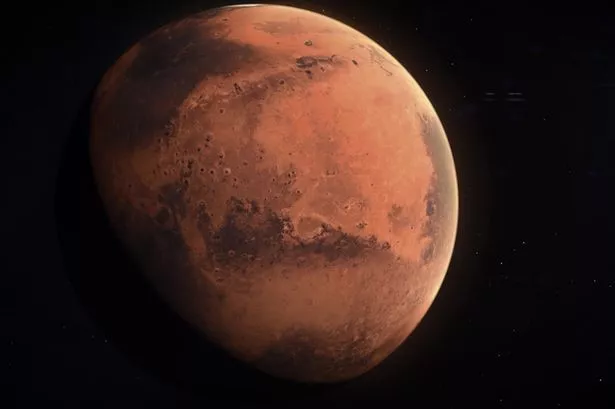
In a historic announcement, NASA confirmed Wednesday that its Perseverance rover has uncovered what could be the clearest sign of life ever detected on Mars. The discovery, unveiled during a press conference with U.S. Transportation Secretary and NASA Administrator Sean Duffy, has ignited excitement across the scientific world — and beyond.
“This is the clearest evidence of ancient microbial life on Mars that we’ve ever found,” Duffy said.
What the Rover Found
The breakthrough stems from samples collected in Mars’ Jezero Crater, a site that scientists believe once hosted a flowing river billions of years ago.

Nicky Fox, who joined Duffy at the press briefing, explained that the rover found a “kind of signature” in the rock samples that strongly suggests biological activity. In layman’s terms, the chemicals detected — including iron and phosphorus — could have been produced by tiny microorganisms that once broke down organic material, much like microbes do on Earth today.
“These features may indicate that life existed on Mars long before humans walked the Earth,” Fox added.
This discovery is shaping up to be one of the most significant in space exploration history, potentially changing how we understand life beyond our planet.

Why It Matters
NASA’s Perseverance rover has been exploring the Red Planet since 2021, searching for signs of past life and analyzing its surface to understand Mars’ geological and chemical history. Scientists have long suspected that Mars had water and possibly life-supporting conditions billions of years ago, but this latest finding provides the strongest evidence yet.
For decades, researchers have debated whether Mars could have supported microbial life. Now, with these new samples, the conversation has shifted from speculation to tangible proof that ancient life may have thrived there.
The Science Behind the Discovery
The rover’s analysis focuses on chemical signatures and rock formations that are characteristic of biological activity. Scientists detected:

- Iron and phosphorus compounds that may have been metabolized by microorganisms
- Structural features in ancient rocks that mimic biological patterns seen on Earth
- Evidence suggesting the former presence of a river system capable of supporting microbial life
These clues hint at a time when Mars may have been a vibrant, watery world with the conditions necessary for life to flourish.
What’s Next for NASA
While this discovery is monumental, NASA emphasizes caution: scientists will continue to examine the samples in more detail, both on Mars and once returned to Earth in future missions. The goal is to confirm whether the chemical and structural signatures truly indicate life or if alternative explanations exist.
This marks a new era in planetary exploration, as NASA accelerates efforts to understand the Red Planet and the potential for extraterrestrial life.

Mars Dreams in American Politics
The announcement also ties into broader ambitions surrounding space exploration. Former President Donald Trump previously expressed interest in Mars missions, even envisioning planting a flag on the planet. While such missions remain decades away, discoveries like this one fuel public imagination and scientific ambition.
The Public Reaction
News of Mars’ possible life signs has spread rapidly across social media, sparking excitement, speculation, and wonder. Scientists, space enthusiasts, and the general public are weighing in:
- Excitement: Many are thrilled about the implications for discovering life beyond Earth.
- Curiosity: People are asking how soon humans could visit Mars.
- Debate: Some remain cautious, emphasizing that scientific confirmation is still needed.
Stay Tuned
With NASA’s Perseverance rover still hard at work, we can expect more groundbreaking discoveries in the coming years. For now, the notion that life may have once existed on Mars is capturing the imagination of the world.
Could tiny Martian microbes change humanity’s understanding of the universe? Only time — and science — will tell.
Call to Action:
What do you think — did life really exist on Mars? Drop your thoughts below and stay tuned for exclusive updates on NASA’s ongoing exploration!