


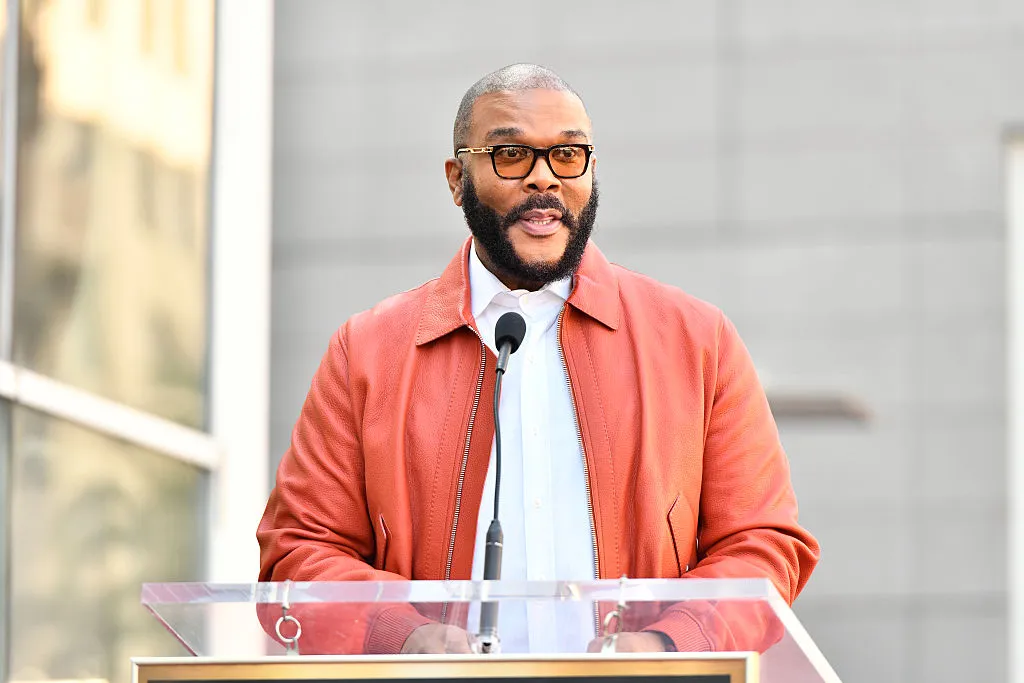
A legal showdown involving Tyler Perry has escalated inside the courtroom as his accuser pushes for sanctions, claiming the filmmaker refused to participate in a deposition unless certain questions were off-limits.
The dispute adds a new layer of tension to a $77 million lawsuit already packed with serious allegations and conflicting accounts from both sides.
At the center of the latest filing is not just what happened in the past — but what can and cannot be asked under oath.
According to court documents, Mario Rodriguez is asking a judge to sanction Tyler Perry for allegedly failing to appear for a scheduled deposition.
Rodriguez claims he has been attempting to take Perry’s deposition since April 14, but says the process has repeatedly stalled.
He further alleges that Perry and his legal team stated the filmmaker would only sit for questioning if there was an agreement that he would not be asked whether he is, or has been, sexually attracted to men.
Rodriguez argues that such a restriction is inappropriate, especially given the nature of the lawsuit and prior allegations involving other male accusers.

He is now asking the court to step in and enforce compliance with the deposition process.
But that’s not even the wildest part…
Tyler Perry’s legal team is pushing back hard, calling the motion entirely baseless.
Attorney Alex Spiro says Perry did not refuse to appear and denies that any improper restrictions were placed on questioning.
In a statement, Spiro described the claims as a “shakedown” and said the defense will be seeking sanctions of its own.
The legal team maintains that Perry is fully prepared to respond in court and that the allegations are being mischaracterized.
Mario Rodriguez previously filed a lawsuit accusing Tyler Perry of sexual assault, sexual battery, and other related claims.

The lawsuit seeks $77 million in damages.
Rodriguez claims he met Perry in 2015 at a gym, which eventually led to a small role in “Boo! A Madea Halloween.”
He alleges that in 2018, during a visit to Perry’s home, he was sexually assaulted.
Rodriguez further claims there were multiple encounters and financial payments made after the alleged incidents.
Tyler Perry has denied all allegations.
His legal team argues that Rodriguez maintained contact with Perry after the alleged events and continued requesting financial assistance, suggesting the claims surfaced after those requests were declined.
Texts reportedly obtained in connection with the case show Rodriguez thanking Perry for assistance and requesting financial help for personal expenses.

The deposition dispute quickly gained attention online due to the unusual nature of the legal argument.
The internet had thoughts, and they were not holding back.
Many users focused on the clash over whether certain personal questions should be allowed in a sworn legal setting.
Others debated how celebrity lawsuits often expand beyond the original claims into procedural battles that can stretch cases out for months or years.
Within hours, the case became another example of how Hollywood legal disputes can quickly turn into public spectacle.
Some observers believe the deposition fight is a standard legal maneuver aimed at limiting scope of questioning.
Others argue the opposing side is trying to broaden the case into areas that may not be directly relevant to the allegations.

It remains unclear how the judge will rule on the motion for sanctions or whether the deposition will proceed under revised conditions.
For now, both sides remain firmly locked in a procedural standoff.
Beyond the legal filings, the case highlights how high-profile lawsuits often become battles over privacy, reputation, and courtroom strategy.
For the accuser, the deposition represents a key step in pursuing financial damages and legal accountability.
For Tyler Perry, the stakes involve protecting both personal privacy and professional reputation in an intensely public environment.
A $77 million lawsuit, a stalled deposition, and a courtroom fight over what questions can even be asked — turning an already explosive case into a procedural war.
In Hollywood court battles, sometimes the biggest drama isn’t the allegations — it’s what happens before anyone even takes the stand.
