



Karmelo Anthony Found Guilty in Fatal Austin Metcalf Murder Case After Jury Verdict
A closely watched Texas murder trial has reached a dramatic conclusion.
Karmelo Anthony has been found guilty of murder in connection with the fatal stabbing of fellow teenager Austin Metcalf, following a jury verdict delivered in Collin County after hours of deliberation.
The decision marks a major turning point in a case that has drawn national attention, intense online debate, and widespread scrutiny since the April 2025 incident at a Frisco high school track meet.
Anthony now faces a potential sentence ranging from 5 to 99 years in prison.
And with the verdict delivered, one of the most polarizing youth violence cases in recent Texas legal history moves into its sentencing phase.
Jury Rejects Self-Defense Argument
At the center of the trial was a disputed confrontation that occurred under a team tent during the track meet.
According to prosecutors, the encounter escalated from a verbal dispute into a fatal stabbing, with Anthony responsible for turning a disagreement into a deadly act.
The defense, however, argued that Anthony acted in self-defense, maintaining that the situation unfolded in a way that left him no alternative.
After reviewing hours of testimony, jurors ultimately rejected that argument.
The guilty verdict confirms the jury accepted the prosecution’s narrative over the self-defense claim presented during trial.
But that’s not even the most significant part of the case record.
The trial included extensive evidence presented over several days in court.
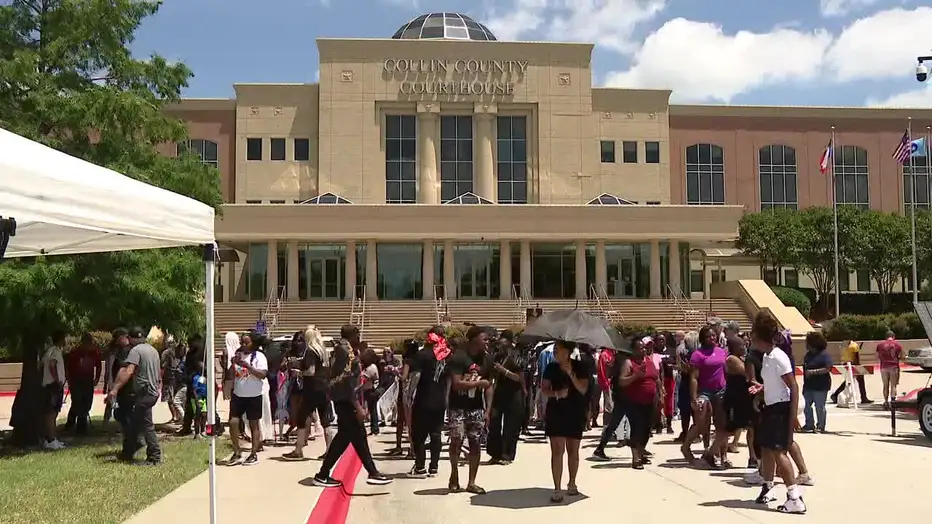
Evidence Presented in Court
Throughout the proceedings, jurors heard testimony from students, coaches, and law enforcement officers who were present or involved in the aftermath of the incident.
Prosecutors also presented surveillance footage, body camera recordings, and emergency 911 calls as part of their case.
One of the most emotionally charged moments occurred when Austin Metcalf’s family was present in court as first responders’ efforts to save his life were shown during testimony.
The courtroom atmosphere was described as tense and deeply emotional during these presentations.
While defense attorneys maintained that the context of the confrontation supported a self-defense claim, prosecutors argued the evidence demonstrated escalation and intent beyond that justification.
Ultimately, the jury sided with the prosecution.
And then things got really consequential.
Legal Context and Key Trial Details
As previously reported during the proceedings, a Frisco detective confirmed that the knife carried by Anthony on the day of the incident was legally permitted under Texas law and allowed within the stadium setting.

However, prosecutors emphasized that the legality of the weapon was not the central issue in the case.
Instead, the focus remained on how the confrontation unfolded and whether Anthony’s actions constituted lawful self-defense or unlawful use of force.
Anthony was initially held on a $1 million bond before it was later reduced to $250,000.
He ultimately pleaded not guilty following his indictment on a murder charge.
The trial that followed drew widespread attention beyond Texas, becoming a focal point for national discussions on youth violence, self-defense laws, and school event safety.

A Case That Gripped National Attention
From the moment Austin Metcalf was killed at the Frisco track meet in April 2025, the case quickly escalated into a widely discussed legal and cultural flashpoint.
Social media users, legal commentators, and community members all weighed in as details of the incident emerged.
As the trial progressed, public interest only intensified, especially as new evidence and testimony were introduced in court.
The case became one of the most closely followed teen-related murder trials in recent Texas history.
And with Tuesday’s verdict, that public attention is now shifting toward sentencing and what comes next for Anthony.

Social Media Reaction to the Verdict
Following the jury’s decision, reactions spread rapidly across social platforms.
The internet had thoughts, and they came quickly.
Some users focused on the emotional weight of the verdict, especially for the family of Austin Metcalf, who has been at the center of the case since the beginning.
Others debated the jury’s rejection of the self-defense argument, with commentary splitting across legal interpretations of the evidence presented.
Within hours, discussion threads, livestream reactions, and commentary videos began circulating widely across X and other platforms.
The case once again dominated trending topics as users processed the outcome in real time.
And for many, the verdict marked the end of a long-running and highly publicized legal saga.

The Human Impact Behind the Headlines
Beyond the courtroom arguments and legal analysis, the case centers on two families whose lives were permanently changed by the events of April 2025.
Austin Metcalf’s family has endured a prolonged legal process that included emotionally difficult courtroom testimony and public scrutiny.
At the same time, Karmelo Anthony now faces a life-altering sentence following the jury’s decision.

Cases like this often extend far beyond the legal system, leaving lasting impacts on communities, schools, and families involved.
As sentencing approaches, the focus now shifts to accountability, closure, and the long-term consequences of the tragedy.
What Happens Next
With the guilty verdict now entered, Karmelo Anthony will proceed to the sentencing phase of the trial.
He faces a range of 5 to 99 years in prison under Texas law for the murder conviction.
The court will determine the final sentence based on legal guidelines, case details, and sentencing arguments presented by both sides.
Until then, the case remains formally active as the judicial process continues.
What began as a confrontation at a school track meet has now ended in a murder conviction that will reshape multiple lives moving forward.
One takeaway from the case that continues to resonate: courtroom outcomes often hinge not just on what happened in a moment—but how that moment is interpreted under the law.
As sentencing approaches, one question now lingers—how will the court ultimately define justice in a case that has already changed so many lives?
