


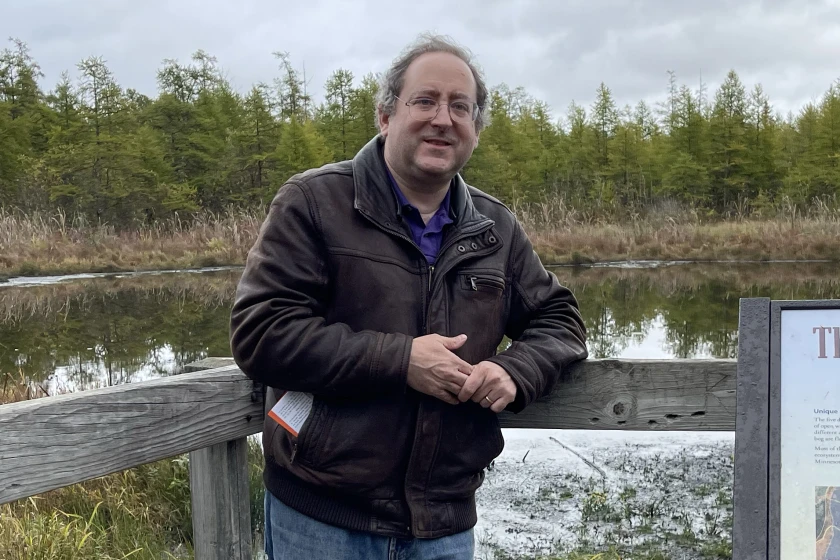
Mark “DJ Ice Box” Josephson, an early champion of Chicago hip-hop radio, has died at 58.
Josephson died July 19 after helping introduce generations of Chicago listeners to the city’s emerging rap scene through his broadcasts on WHPK-FM 88.5, the University of Chicago station where he began DJing in 1986.
At the time, commercial radio stations in Chicago rarely played hip-hop. WHPK’s rap program, which launched in 1984, operated with only 100 watts, but its signal reached much of the South Side — giving young rappers a crucial connection to listeners.
Josephson was a University of Chicago student studying Near Eastern languages and civilizations when he began hosting late-night rap as DJ Ice Box.

For local artists, the station became more than a place to hear records from New York. DJs also accepted tapes from Chicago rappers looking for their first taste of radio exposure. Some artists would call the station from a nearby payphone, with DJs collecting their tapes and occasionally inviting them inside.
Darrell “Artistic” Roberts, a member of the Curfew Crew, recalled discovering WHPK in the mid-1980s and recording its broadcasts. That connection eventually helped Roberts get his first song played on Chicago radio.
Josephson also stood out behind the turntables. C. “Kingdom Rock” Sanders, who later co-founded the Chicago Hip Hop Heritage Museum, remembered him as an unexpected figure in the scene.
John Schauer, another WHPK DJ known as J.P. Chill, said he and Josephson never tried to imitate Black culture, describing their approach as simply being themselves. Roberts similarly recalled a connection that crossed racial lines.
Josephson later became an attorney but maintained his connection to music and Chicago hip-hop. In 2024, he attended a Common concert wearing a WHPK shirt.
“It was surreal to see a bunch of middle-aged Black guys get so excited to meet my dad,” his son, Ari Josephson, said.
Josephson had frontotemporal dementia and ALS. He is survived by his wife, Lea, and children Ari and Shayna.
For a DJ who started on a 100-watt college station, his influence extended far beyond the reach of WHPK’s signal — helping create an early radio bridge between Chicago’s emerging hip-hop artists and the audience waiting to hear them.
