


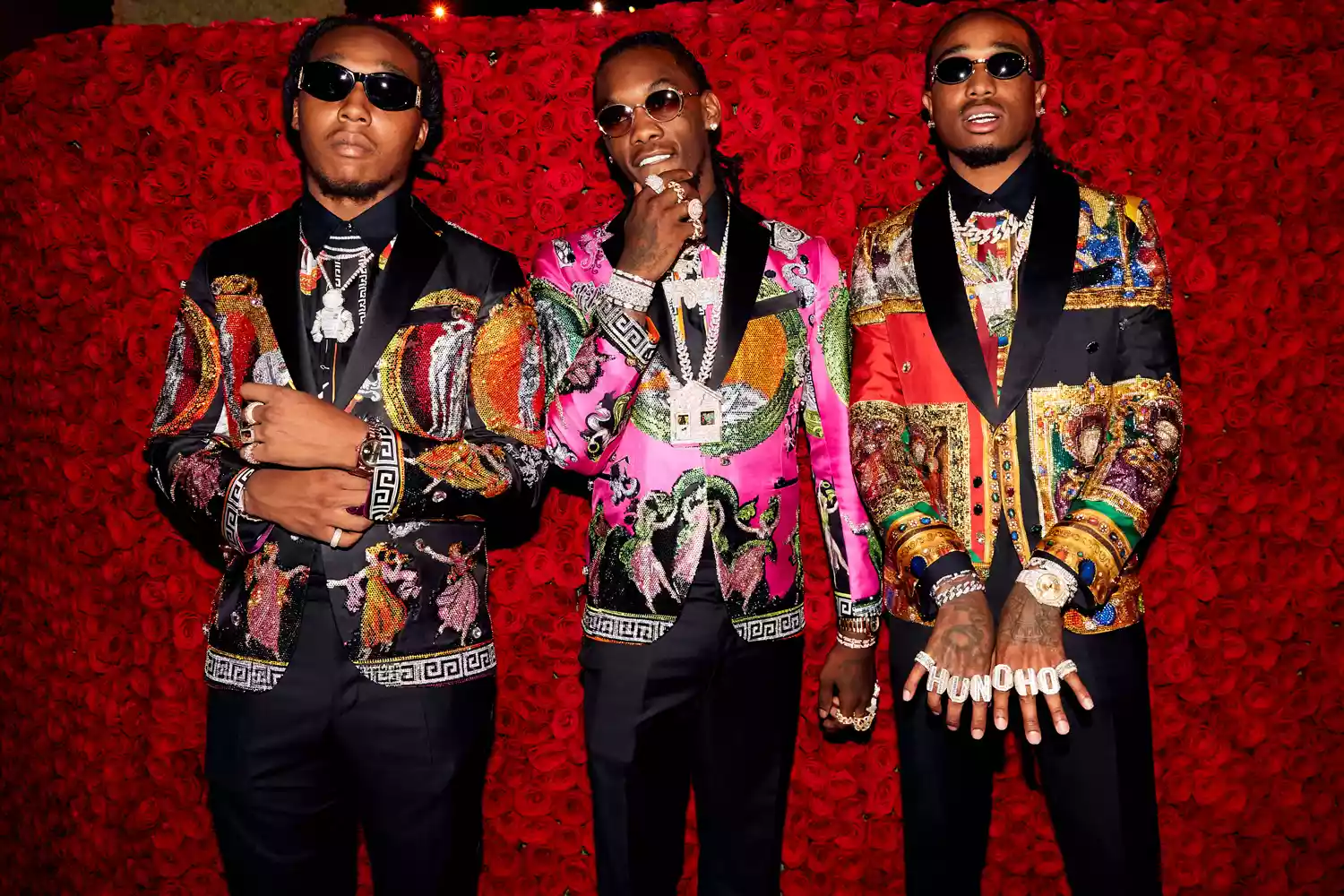
Quavo and Offset could be called to testify in a legal battle involving Takeoff’s mother, Titania Davenport, and the late Migos rapper’s father, Kenneth Ball.
According to court documents, Davenport is fighting Ball over how a settlement stemming from Takeoff’s wrongful-death lawsuit should be divided.

Davenport is arguing that the dispute should be handled in Georgia rather than Texas, pointing to the location of potential witnesses — including Quavo and Offset — who she says live in the Atlanta/Athens area.
She argues that forcing those witnesses to appear in Houston would create additional travel expenses.

The settlement at the center of the dispute stems from a lawsuit Davenport filed against the Texas bowling alley where Takeoff was fatally shot in November 2022.
In court documents, Davenport describes her relationship with her son as extremely close and says she essentially raised him as a single mother.


She also says Takeoff financially supported her while he was alive, including helping pay her bills.
Davenport is challenging Ball’s claim to a significant portion of the settlement. In her filing, she alleges that Ball provided “negligible financial support and effectively no emotional support” during Takeoff’s childhood.

Those are Davenport’s claims in the ongoing legal dispute and have not been established as findings by a court.
The potential involvement of Quavo and Offset could add a major Migos connection to the case. Both rappers were close collaborators with Takeoff and, according to Davenport’s filing, are among the witnesses relevant to the dispute.

Takeoff, whose real name was Kirshnik Khari Ball, died on November 1, 2022, in Houston. He was 28.
Authorities charged Patrick Xavier Clark in connection with Takeoff’s killing. The criminal case is separate from the civil settlement dispute between Takeoff’s parents.
For now, Quavo and Offset have not been confirmed as witnesses who will ultimately testify. Davenport is arguing that their location — and that of other potential witnesses — supports having the legal dispute handled in Georgia rather than Texas.
