


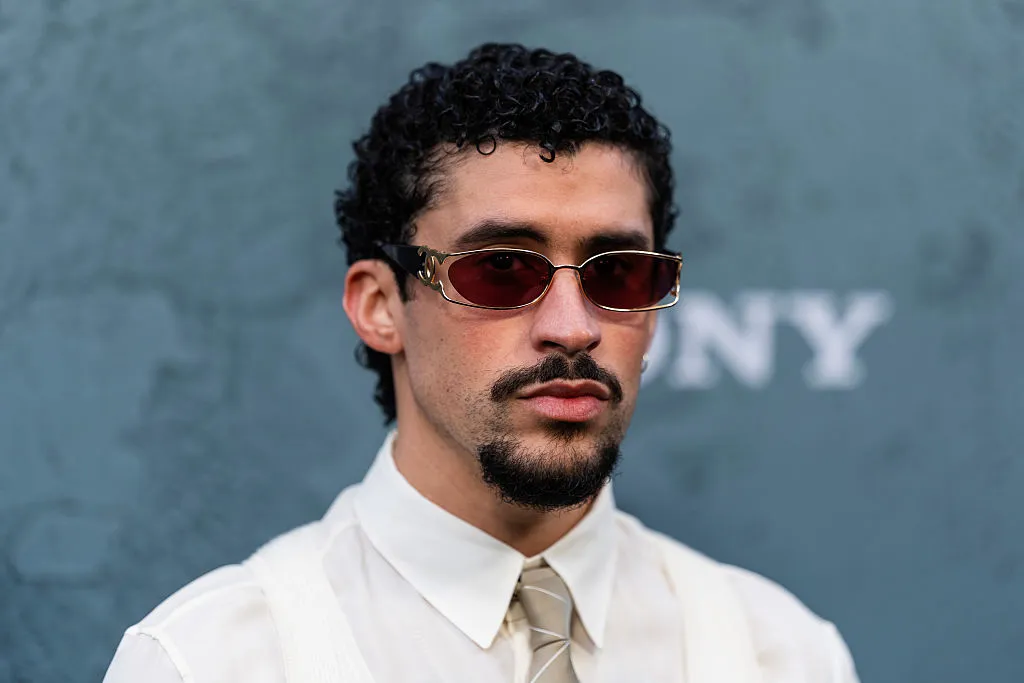
The lights were blazing. The dancers were moving. Social media was already exploding before the second song even ended. But while millions of viewers celebrated the spectacle of Bad Bunny’s Super Bowl halftime performance, thousands of others were apparently reaching for something else entirely — the complaint form.
What was supposed to be one of the biggest career moments for the Puerto Rican superstar quickly turned into a culture war playing out in real time across America. According to complaints reportedly sent to the FCC after February’s Super Bowl LX, some viewers were furious over what they described as “sexualized,” “inappropriate,” and even “anti-American” content during the performance.
And then things got really interesting.
Despite the outrage, the show still pulled a jaw-dropping 128.2 million viewers, making it one of the most-watched halftime spectacles in recent memory. Love him or hate him, people were definitely watching.
Bad Bunny didn’t just perform at the Super Bowl — he dominated the conversation afterward.
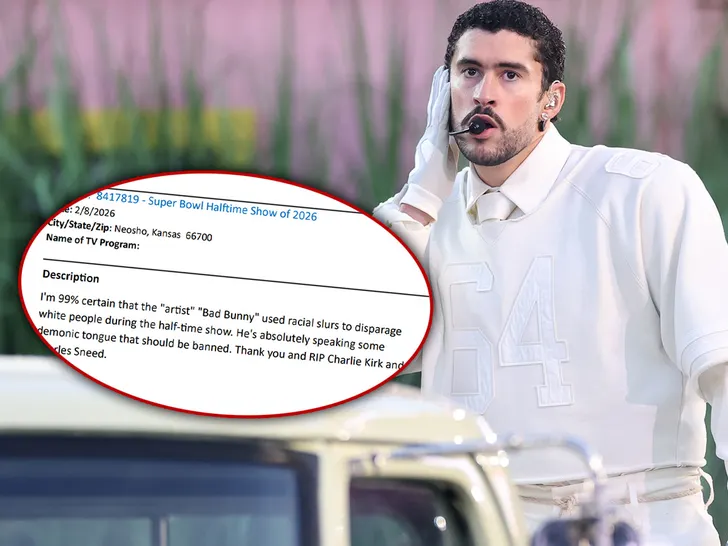
According to documents obtained by TMZ, more than 2,000 complaints were reportedly submitted to the FCC following the game, with over 100 directly targeting the halftime show itself. The complaints ranged from criticism about dance choreography to outrage over lyrics and staging choices.
Some viewers allegedly claimed the performance crossed the line into explicit territory, pointing to moments involving hip movements, crotch-grabbing, and dancers touching one another during routines. One complaint reportedly claimed the viewer felt “forced to see a man’s penis and balls,” while others accused the show of pushing overt sexual imagery during a family broadcast.
But the choreography wasn’t the only thing triggering backlash.
A surprising number of complaints focused on the fact that Bad Bunny performed primarily in Spanish. Several viewers claimed they couldn’t understand the lyrics, while others argued the content would have caused even more outrage if translated into English.
That criticism immediately sparked backlash of its own online, with fans defending the global superstar and accusing critics of targeting Latino culture more than the actual performance itself.
And honestly? The internet had plenty to say about that.
Some complaints went even further, describing the show as “anti-American” and bizarrely accusing the Grammy-winning artist of speaking in a “demonic tongue” — comments that quickly became meme material online once reports surfaced.
Within hours, clips from the performance were circulating across TikTok, X, and Instagram alongside screenshots of the complaints themselves. Fans roasted the outrage almost instantly.
One viral post joked, “America survived Elvis shaking his hips but can’t survive Bad Bunny dancing?” Another user wrote, “Calling Spanish a demonic tongue in 2026 is absolutely insane behavior.”

That wasn’t even the wildest part.
The controversy surrounding Bad Bunny’s halftime show had actually started weeks before kickoff. Critics from conservative circles had already slammed the NFL for selecting the global reggaeton icon as the face of the year’s biggest sporting event.
Charlie Kirk’s organization, Turning Point USA, even created an alternate “All-American Halftime Show” featuring artists including Kid Rock, Brantley Gilbert, Lee Brice, and Gabby Barrett. The move instantly turned the performance into something bigger than music — it became part of a broader online debate about culture, identity, language, and what mainstream entertainment in America is “supposed” to look like.
Kid Rock later added fuel to the fire during a televised appearance where he openly admitted he “didn’t understand any of it,” referring to Bad Bunny’s Spanish-language performance.
Fans, however, weren’t buying the outrage.
Supporters pointed out that Bad Bunny is one of the biggest artists on the planet, with billions of streams, sold-out stadium tours, and an international fanbase that stretches far beyond the United States. To them, the halftime show reflected the reality of global pop culture in 2026 — multilingual, genre-blending, and unapologetically bold.
For newer readers unfamiliar with Bad Bunny’s rise, the artist — born Benito Antonio Martínez Ocasio — transformed from a Puerto Rican trap artist into one of the most influential musicians of his generation. Over the last several years, he has shattered streaming records, headlined massive festivals, and crossed into fashion, wrestling, and Hollywood.
He’s also never been afraid of controversy.
From politically charged visuals to unapologetic performances celebrating Puerto Rican identity, Bad Bunny has built a reputation around doing exactly what he wants — even when critics hate it.
And critics have hated plenty.
Past Super Bowl performers including Rihanna and Kendrick Lamar also faced waves of FCC complaints after their appearances. Sexual imagery, provocative lyrics, and politically interpreted moments have become almost expected parts of halftime controversy over the years.
In other words, Bad Bunny may have simply joined an exclusive club.
Still, what made this backlash explode online was the combination of sexuality and language. Fans immediately noticed that many complaints focused less on what was happening visually and more on discomfort with Spanish lyrics dominating America’s biggest televised event.
That sparked a fierce online debate.
Some fans believed the outrage exposed deeper cultural tensions in the country. Others argued viewers were overreacting to standard pop performance choreography that has existed for decades.
It’s unclear whether the backlash will have any lasting effect on Bad Bunny’s career — but if streaming numbers and social engagement are any indication, the controversy may have only boosted his visibility.
Because while critics were filing complaints, millions of fans were replaying clips online.
One moment in particular went massively viral: Bad Bunny celebrating emotionally backstage alongside Ricky Martin after the performance wrapped. The clip spread rapidly across social media, with many viewers praising the representation and cultural pride displayed during the show.
That emotional contrast — celebration on one side, outrage on the other — became the entire story.
And beneath all the chaos, there’s a bigger reality here. Performances like this don’t just entertain anymore. They trigger conversations about identity, generational divides, language, and who gets to represent mainstream culture on the world’s biggest stages.
Bad Bunny knew people would talk.
He probably just didn’t expect thousands of FCC forms to become part of the afterparty.
The ironic twist? The louder critics complained, the bigger the halftime show became online. Every angry comment, every viral reaction, every debate clip only pushed Bad Bunny further into the center of the cultural conversation.
One thing’s for sure — Bad Bunny didn’t walk onto that Super Bowl stage to play it safe. And judging by the internet chaos afterward, he definitely accomplished that. So… was the outrage genuine, or did America just witness the most successful controversy of the year?
