


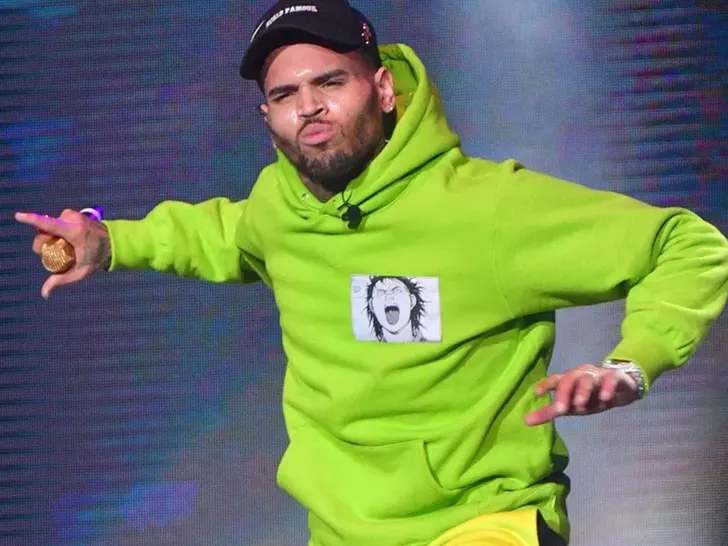
Getting a 1.3 from Pitchfork is the kind of critical gut-punch most artists quietly absorb and never speak on. Chris Brown is not most artists.
After the music publication dropped one of the harshest reviews of the year — calling his new album Brown a “soulless, hit-chasing” project that “doesn’t justify his return to the public eye” — CB went straight to Instagram Stories with a message that made it very clear he had read every single word.
And he was not in a forgiving mood.
In a fiery Insta Story posted Tuesday, Chris Brown addressed the noise head-on. He told fans he knew they wanted a reaction — and then he delivered one wrapped in adrenaline and touring energy.
“We kickin’ they ass!”

He kept going. “I’ma keep my foot on they neck and we ain’t stopping,” he added — which, depending on who you ask, is either a power move or proof the review got deeper under his skin than he’d like to admit.
Rather than dwell on the criticism, CB pivoted to what he says matters most: his fans and the road ahead. He pointed to his upcoming “The R&B Tour” with Usher — set to kick off in June — as the real flex. Arenas over algorithms. Tickets over think-pieces.
But that’s not even the wildest part…
In the same breath, he threw a direct shot at Swedish pop star Zara Larsson, encouraging his haters to go stream her music instead. The shade was deliberate — Larsson had recently revealed she blocks Chris Brown’s music on Spotify, citing his history of abuse allegations.
So CB essentially told his critics to enjoy their playlist. Petty? Absolutely. Effective? Debatable.

If you’ve been even peripherally tuned into pop culture over the last decade, you know Chris Brown’s story is complicated doesn’t begin to cover it. The Grammy-winning R&B singer has spent years navigating both massive commercial success and serious public controversy, most notably stemming from his 2009 assault of then-girlfriend Rihanna.
His attempts at career rehabilitation have been a stop-start affair — moments of genuine chart heat followed by renewed public backlash. The new album Brown appears to be his latest bid at reclaiming a lane in mainstream music, and Pitchfork was not willing to give him a soft landing.
Zara Larsson, meanwhile, has been vocal about holding a firm line on streaming artists she considers abusers. Her Spotify-blocking comments weren’t aimed exclusively at Brown, but they were specific enough to land — and clearly they did.
Fans immediately noticed the Insta Story — and the screenshot spread fast. The combination of CB’s unfiltered language and the Zara Larsson callout was social media catnip.
The internet had thoughts, and they were not holding back. Comment sections split almost perfectly down the middle: half the crowd cheering the clapback energy, the other half pointing out that a 1.3 Pitchfork score might warrant more than a few Instagram slides.
And then things got really interesting — “Chris Brown Pitchfork” started trending, putting the album review in front of millions who probably hadn’t heard about it in the first place. A clapback that accidentally becomes free press is a very specific kind of irony.
Some fans believe the clapback was calculated — a way to generate buzz around the album and the tour in a single move. “He knew exactly what he was doing,” read one top comment with thousands of likes.
Others weren’t buying the bravado. “If the album was good, you wouldn’t need to say anything,” wrote one user — a take that also racked up serious engagement.
Sources close to the tour say the June dates are selling and Brown’s team is focused entirely on the live run with Usher. It’s unclear whether the Zara Larsson name-drop will spark a public back-and-forth, but given both artists’ track records of speaking their minds, it would be surprising if it didn’t.
Behind the bravado, there’s something genuinely complicated happening here. Chris Brown has spent the better part of 15 years trying to separate his music from his history — and critics like Pitchfork consistently refuse to let those two things exist independently.
Whether you believe art should be separated from the artist or not, being told your work “doesn’t justify your return to public life” isn’t just a bad review. That’s a verdict on whether you deserve to exist in the cultural space at all. And for someone still fighting for relevance, those words sting differently than a low score.
The most ironic part? By firing back, Chris Brown guaranteed that more people read that 1.3 review than Pitchfork ever could have managed on their own. The clapback king just did their marketing for them.
One thing’s for sure — Chris Brown did not come to play. The tour is booked, the clapback is posted, and Zara Larsson’s Spotify queue just got a little more interesting. The only question left: are we talking about the music, or the moment?
