


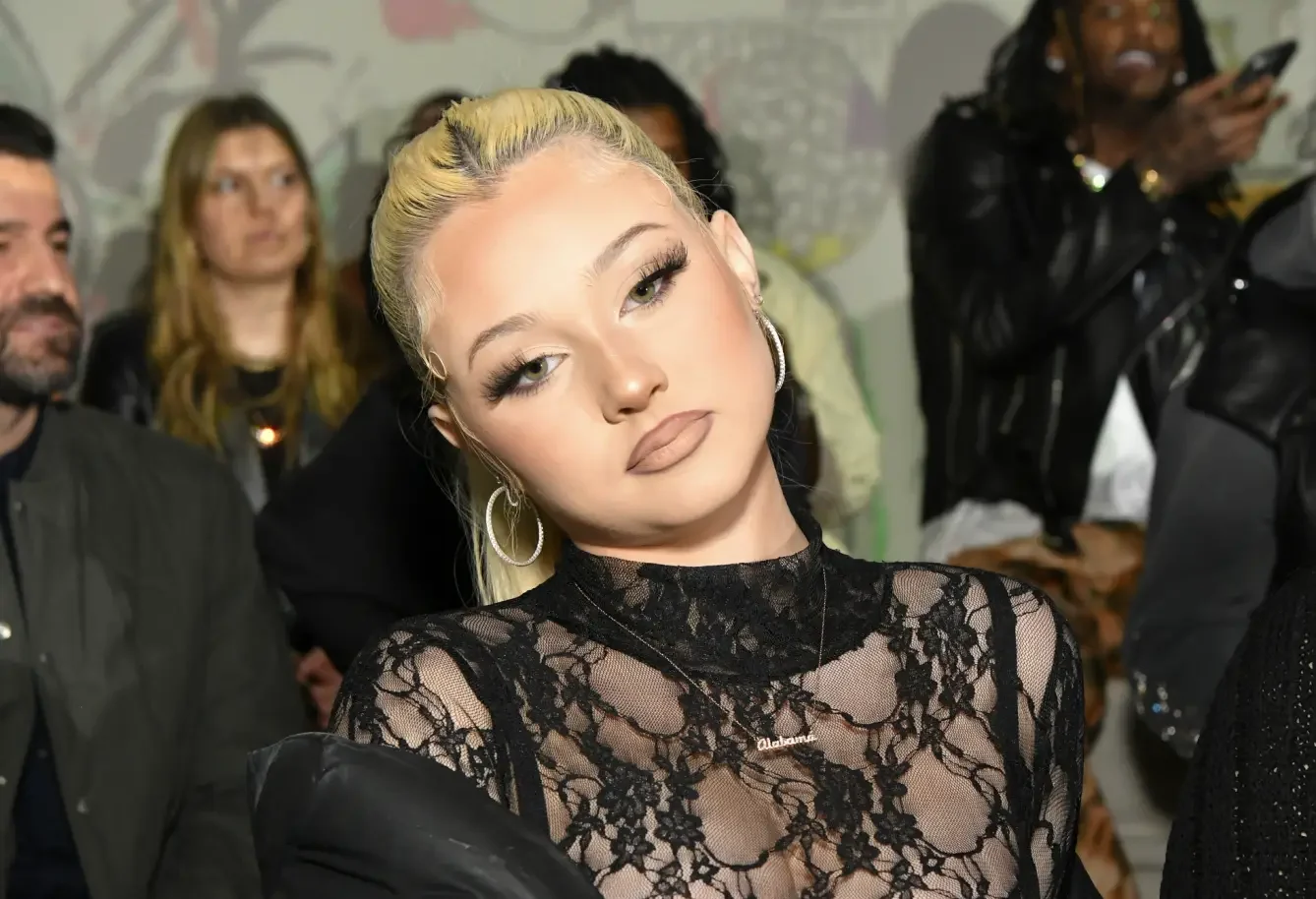
Alabama Barker is pushing back against online rumors about her sexual health after a screenshot allegedly showing a herpes-related search sparked speculation among followers.
The daughter of Travis Barker addressed the claims Monday, August 10, during a livestream before later taking the issue to Instagram.
Barker firmly denied having an STD and said she wanted to put the speculation to rest.
“Hey bitch, I am clean,” she said during the livestream after a follower repeatedly mentioned STDs.
Barker also said she had shared her blood work and insisted she had “actually never had an STD in my life.”
The explanation came after an alleged search-history screenshot appeared to show a query for “Genital Herpes Medication – Roman Herpes Treatments Online.”
The online speculation centered on a screenshot that appeared to show a herpes-related search associated with Barker.
As the image circulated, followers began questioning whether it indicated that the entertainer had herpes.
Barker addressed the rumors directly during a livestream, where she confronted a viewer repeatedly bringing up sexually transmitted diseases.


“Bitch, stop commenting STD, bitch,” Barker said.
She then denied the claims, telling viewers, “Hey bitch, I am clean.”
Barker continued by saying she had shared her blood work and maintained that she had never had an STD.
“I’ve actually never had an STD in my life — respectfully,” she said.
The entertainer later addressed the issue more formally on Instagram, saying she wanted to explain the situation once and move on from it.
“I do not have any STDs, and the false information being spread about my health needs to stop,” Barker wrote.
She also offered an explanation for the screenshot that had fueled the speculation.
According to Barker, she had typed “Roblox” into a search bar, which caused something from Ro.co to appear.
She said she had previously searched for information about herpes because people were claiming that her friend Nadia had the condition.

Barker explained that she was researching the subject because she wanted to understand what people were discussing—not because she was dealing with the condition herself.
“I wanted to inform myself on what they were talking about !! not because I have anything,” she wrote.
Barker also said she does not regularly use the computer connected to the screenshot.
In another Instagram comment, she questioned the authenticity of the search-history claims.
“You guys, this iMac has no search history. I have no idea what Roman herpes is,” she wrote.
Barker said she had purchased the computer approximately two weeks earlier and had not used it until the day before.
Her explanation did not stop the conversation immediately, but it gave her followers additional context about why a herpes-related search might have appeared.
Barker is the daughter of Blink-182 drummer Travis Barker and has built her own public profile as an entertainer and social-media personality.
Because of that visibility, her personal life frequently becomes the subject of online discussion.

This latest controversy began with an alleged screenshot rather than a confirmed medical record.
Barker has repeatedly denied the claim that she has an STD and has characterized the information circulating about her health as false.
She has also explained why she says she searched for information related to herpes, pointing to previous online claims involving her friend Nadia.
The distinction is important because searching for information about a medical condition does not establish that the person conducting the search has that condition.
Barker’s own explanation is that she was trying to educate herself about something other people were discussing.
The episode highlights how quickly a private search or an alleged screenshot can become a public health rumor when attached to a recognizable celebrity.
Barker’s response also reflects the sensitivity of speculation about sexually transmitted infections.
Rather than allowing the screenshot to speak for itself, she directly disputed the allegations and provided her own explanation for the search.
Some followers also defended her right to research sexual health without having the subject automatically interpreted as evidence of a diagnosis.

That distinction is particularly important when the underlying information is an unverified screenshot and the person involved has explicitly denied the allegation.

Some commenters pushed back against the speculation and defended Barker’s decision to research sexual-health information.
One follower argued that there was nothing wrong with a young person educating herself about the subject.
Another praised Barker for getting tested, while a third joked about how searching for information about herpes could easily be misinterpreted as evidence of having the condition.
The reactions reflected the broader issue surrounding the controversy: researching a medical topic does not necessarily mean someone has the condition being searched.
Barker’s frustration appears to stem from having personal health information discussed publicly based on a screenshot she says does not prove what people are claiming.
Her decision to address the rumors directly shows how difficult it can be for public figures to separate ordinary private behavior from online speculation.
For now, Barker’s position is clear: she denies the allegations and wants people to stop spreading what she describes as false information about her health.
Alabama Barker continues to deny the herpes rumors, saying the screenshot was misunderstood and that she researched the subject simply to understand claims circulating about someone else.
She now wants the speculation about her health to end.
