


Before a Single Witness Takes the Stand, the Biggest Fight Is Already Happening
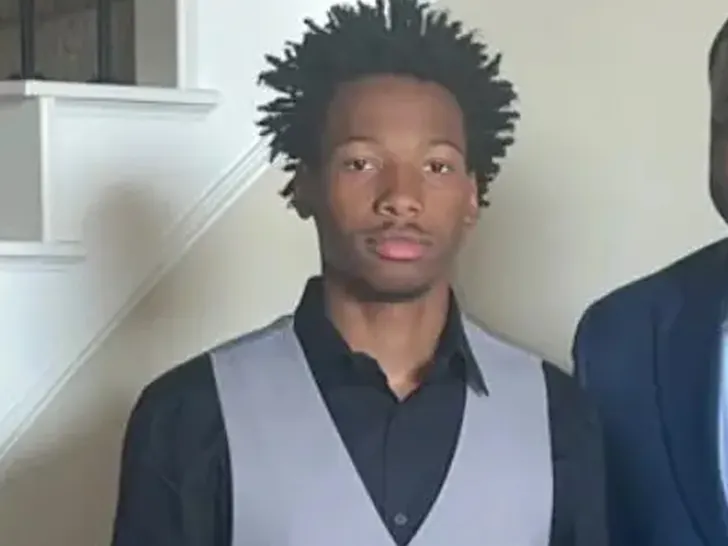
Long before opening statements begin, the courtroom battle surrounding Karmelo Anthony is already exposing a major challenge for both prosecutors and defense attorneys.
It’s not about forensic evidence.
It’s not about eyewitness testimony.
And it’s not about competing versions of what happened during that tragic day at a Texas track meet.
Instead, the fiercest debate so far centers on something far more complicated: whether jurors can separate their emotions from the facts.
As jury selection unfolds in Collin County, Texas, several prospective jurors have openly acknowledged that Anthony’s age could make it difficult for them to fairly decide his fate.
Some admitted they would struggle to convict him.
Others suggested they might find it difficult to send someone so young to prison.
And those comments are already drawing national attention.
Jury Selection Reveals Deep Personal Struggles
According to reports from WFAA, prosecutors spent much of jury selection probing whether potential jurors could remain impartial despite strong personal feelings about the case.
Anthony, now 18, faces a first-degree murder charge in connection with the fatal stabbing of fellow teenager Austin Metcalf during a track meet in Frisco, Texas, in April 2025.
The prosecution reportedly questioned jurors about whether factors such as age, race, or personal family experiences could influence their judgment.

That’s when several revealing responses emerged.
One prospective juror reportedly looked at Anthony and remarked:
“He looks like a child.”
The comment immediately highlighted one of the central emotional tensions surrounding the case.
Another juror reportedly admitted:
“I don’t think I can make a decision about somebody so young. One mistake, one argument, one conflict, you can’t say he’s a bad person.”
Those statements underscored the difficult balancing act courts face in high-profile cases involving young defendants.
But that’s not even the most controversial moment from jury selection.
Race Also Emerges as a Key Topic
As questioning continued, prosecutors reportedly explored whether racial considerations might affect how jurors approached the case.
One prospective juror acknowledged discomfort with the possibility of convicting a Black defendant.
“I don’t know if I feel right putting a brother in jail,” the individual reportedly told the court.
The statement quickly became one of the most discussed moments of the proceedings.
Throughout the process, prosecutors repeatedly emphasized that honesty was critical.
Potential jurors were told there were no right or wrong answers and were encouraged to disclose any personal biases that might interfere with their ability to evaluate evidence objectively.
The goal was straightforward: identify jurors capable of weighing facts rather than emotions.
Finding those jurors, however, may prove easier said than done.
The Case That Captured National Attention
For those just catching up, the case stems from a deadly incident at a Frisco track meet in April 2025.
Authorities allege Anthony fatally stabbed Austin Metcalf during an altercation that took place beneath a team tent while athletes were sheltering during a rain delay.
The tragedy immediately generated widespread media coverage and intense online debate.
As details emerged, discussions spread across social media platforms, where opinions quickly became divided.
Some focused on the loss of a young life.
Others centered their attention on questions surrounding intent, accountability, and self-defense.
The emotional nature of the case has kept it in the national spotlight ever since.
Defense Expected to Focus on Self-Defense Claim
While opening statements have yet to begin, Anthony’s legal team is expected to argue that he acted in self-defense during the confrontation.
That anticipated defense could become one of the most heavily scrutinized aspects of the trial.
Prosecutors, meanwhile, face the burden of proving the elements of first-degree murder beyond a reasonable doubt.
Those competing narratives are expected to dominate courtroom proceedings once testimony begins.
What happened next during that confrontation remains the central question jurors will eventually be asked to answer.
And the answer could determine the outcome of one of the year’s most closely watched criminal trials.
Online Reactions Are Already Intensifying
Unsurprisingly, the jury-selection revelations have sparked intense reactions online.
Fans of true-crime coverage, legal commentators, and social media users have been dissecting every reported comment from prospective jurors.
Many users argued that honesty during jury selection is exactly what the process is designed to uncover.
Others expressed concern about whether deeply personal views could make it harder to seat an impartial jury.
The internet had thoughts, and they were not holding back.
Within hours, discussion threads and comment sections filled with debates about fairness, bias, justice, and accountability.
Some users praised jurors for being transparent.

Others questioned whether such admissions reveal broader challenges facing the justice system.
At this stage, those conversations remain outside the courtroom.
Inside it, attorneys are focused on one thing: finding jurors capable of deciding the case solely on the evidence presented.
The Human Element No One Can Ignore
At the center of the legal arguments are two teenagers whose lives became forever linked by a single tragic encounter.
One family is grieving the loss of a son.
Another family is watching a young defendant face the possibility of spending decades behind bars.
That reality has contributed to the emotional weight hanging over nearly every aspect of the proceedings.
It’s a reminder that beyond the headlines, courtroom arguments, and social media debates, real people are living with the consequences of what happened that day.
The Twist Before Trial Even Begins
The most surprising development so far may be that the first major hurdle in this case isn’t proving facts—it’s finding jurors willing to set aside deeply personal beliefs.
Before attorneys can argue guilt, innocence, or self-defense, they must first answer a different question:
Can 12 strangers leave emotion outside the courtroom?
That’s proving to be a challenge all its own.
As jury selection continues, all eyes remain on Collin County as attorneys work to build a panel capable of deciding one of the most closely watched cases in Texas.
One thing is certain: the trial hasn’t officially started yet, but the debate surrounding it is already impossible to ignore. What do you think—can any case this emotional ever be completely free of personal bias?
