


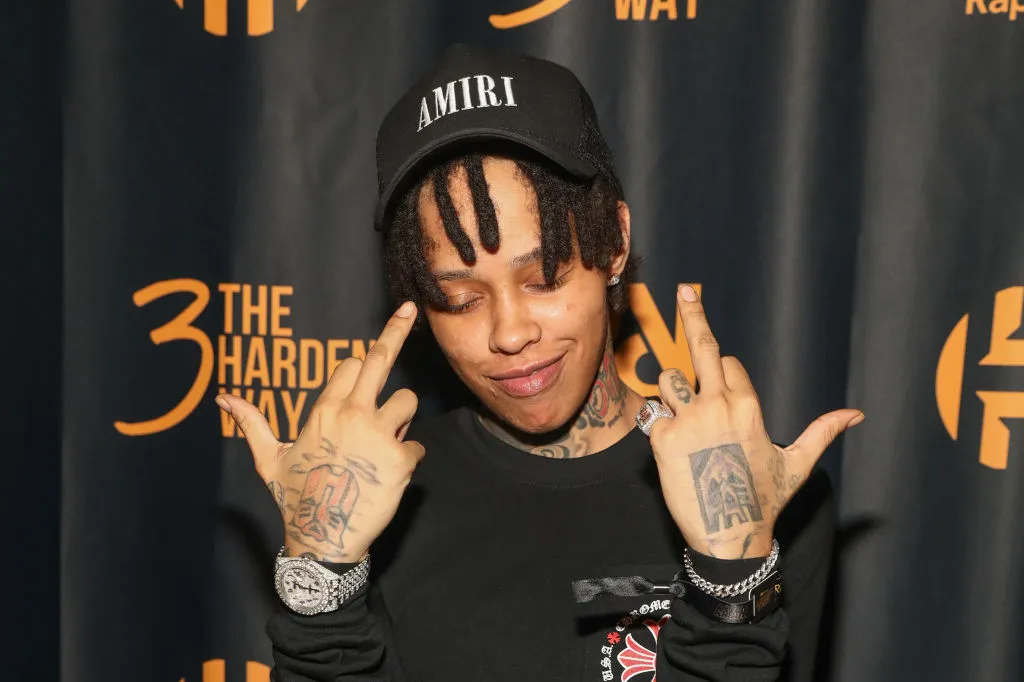
Houston rapper OMB Bloodbath, whose legal name is Alexandra Nicks, has been convicted alongside alleged 103 street gang leader Shaquille Richards in a federal murder case connected to a 2017 retaliatory drive-by shooting in Houston’s Third Ward.
A federal jury found Nicks and Richards guilty of murder in aid of racketeering and using a firearm to commit murder during a racketeering offense, according to details from the case.
The verdict followed a federal trial in which prosecutors argued that Nicks and Richards directed the 103 street gang during a violent conflict with the rival Young Scott Block (YSB) gang.
Prosecutors alleged that the shooting was carried out as retaliation following a series of violent incidents between the rival groups.
The case centered on a deadly October 2017 shooting that authorities said was part of an escalating gang conflict in Houston.
The 2017 Shooting Investigation
According to prosecutors, on October 16, 2017, four alleged 103 gang members entered an area associated with YSB while carrying multiple firearms.

The government presented evidence that the weapons included firearms equipped with large-capacity drum magazines, including 50-round and 100-round magazines.
Prosecutors said the group opened fire after identifying an alleged rival gang member on a street corner.
The intended target survived the attack. However, a 53-year-old bystander who was outside a nearby residence was struck by gunfire and later died from his injuries.
Authorities said the victim had no affiliation with either gang involved in the conflict.
The prosecution argued that the shooting demonstrated the danger created by the alleged gang dispute and the impact it had on people outside the conflict.
@TheJusticeDept v. @ombbloodbath:
— Bryson “Boom” Paul (@brysonboompaul) August 5, 2026
Houston rapper OMB Bloodbath, real name Alexandra Elizabeth Nicks, was found “guilty” by a jury in Count 1 using a firearm during a racketeering mur and mur in aid of reacketeering after 9-day retrial in Houston, Texas, federal court that began… pic.twitter.com/w6sUTYs0E8

Evidence Presented During Trial
To support the racketeering charges, prosecutors relied on multiple forms of evidence, including jail phone calls, social media material, and witness testimony.
The government argued that the evidence showed Nicks and Richards played leadership roles in directing the retaliatory attack.
The case also included allegations about what happened after the shooting. Prosecutors said the suspects crashed their vehicle while attempting to flee.
According to the government’s account, three participants allegedly carjacked a woman whose infant was inside the vehicle, while another suspect fled on foot before being arrested nearby after discarding a firearm and clothing.
Four co-defendants—Deandre Watson, Mertroy Harris, Marcus Christopher, and Marquis Erskin—previously pleaded guilty in connection with the case.
They are scheduled for sentencing on September 2 and each faces the possibility of a life sentence.

Nicks and Richards will be sentenced later by U.S. District Judge George Hanks.
Federal Officials Respond
Federal officials described the case as part of efforts to address violent gang activity in Houston communities.
“This gang war plagued Houston’s Third Ward community for years,” Assistant Attorney General A. Tysen Duva said in a statement.
U.S. Attorney Aaron Reitz also addressed the convictions, saying prosecutors would continue pursuing cases involving alleged violent criminal activity.
“If you wage war on our streets, terrorize our communities, and put innocent Texans in the crosshairs, my office will come for you,” Reitz said.
Why It Matters
The conviction places OMB Bloodbath’s legal situation at the center of a wider conversation about the intersection between hip hop culture, alleged gang activity, and federal prosecutions.

For prosecutors, the case represents an effort to hold alleged gang leadership accountable for violent crimes. For the music community, it highlights the serious legal challenges artists can face when their public image becomes connected to criminal investigations.
The sentencing phase will determine the next legal outcome for Nicks and Richards.
The case marks a major legal development for OMB Bloodbath, an artist who built a following through Houston’s rap scene before becoming involved in a lengthy federal prosecution.
The conviction is based on the jury’s findings after hearing evidence presented during trial. Nicks and Richards are now awaiting sentencing, which will determine the penalties imposed by the court.
The next stage of the case will focus on what consequences follow from the convictions.
