


Usher Ends Onstage Serenade After Fan Appears Uncomfortable, Woman Responds to Viral Backlash
An intimate concert moment involving Usher took an unexpected turn during his Nashville show after the R&B superstar appeared to sense that a fan onstage wasn’t comfortable with his signature serenade.
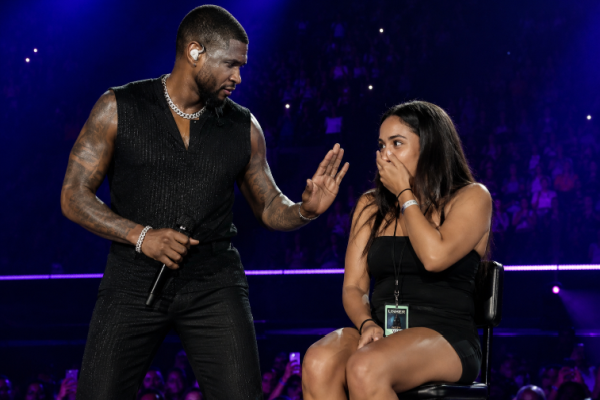
Video from Saturday night’s performance shows a shirtless Usher leaning in toward a seated fan as part of the interactive segment that has become a staple of his live shows. However, after noticing what appeared to be a reserved reaction, the singer quickly changed course, ending the moment before it went any further.
The clip quickly spread across social media, sparking debate over what actually happened and prompting the woman at the center of the moment to tell her side of the story.
Usher Ends the Serenade Midway
During the performance, Usher approached the fan in an attempt to perform one of his trademark close-up serenades.
As the interaction unfolded, the woman’s reaction appeared noticeably reserved.
Rather than continuing, Usher stepped back and addressed the audience.

“I don’t think she wanna be onstage, y’all.”
With that, the singer brought the interaction to an immediate end and continued with the show.
The brief exchange quickly became one of the night’s most talked-about moments online.
Viral Reactions Flood Social Media
After videos of the interaction circulated, many social media users criticized the woman, suggesting she failed to appreciate an experience that many fans would have welcomed.
The moment generated thousands of comments, with viewers debating whether she had intentionally rejected the singer or simply reacted differently than expected.
However, those assumptions were soon challenged by the woman herself.

Gabrielle Cheyenne Shares Her Side
The fan, identified as Gabrielle Cheyenne, later responded to the online criticism through social media.
According to Gabrielle, she never declined the opportunity to go onstage.
She stressed that she had no issue appearing before thousands of people and noted that she was already visible on the venue’s giant screens.
She also revealed that she and her mother originally purchased floor seats before members of Usher’s team surprised them with VIP upgrades.
According to Gabrielle, she wasn’t told which performer she would be joining onstage before the moment happened.
At the time, Usher is touring alongside Chris Brown, and Gabrielle said she did not know in advance who the onstage interaction would involve.

Responding to Critics
Gabrielle also addressed online comments suggesting she should have responded more enthusiastically during the serenade.
She appeared to dismiss criticism from people who believed she should have become more physically expressive in front of the packed arena.
In another post, Gabrielle described herself as naturally quiet and said she only becomes confrontational when provoked.
She added that she would not allow strangers on the internet to bully her over an experience they did not personally have.
Her message was clear: she wasn’t rejecting the spotlight—she simply reacted in her own way.
Usher kicks fan off stage for looking uncomfortable at Nissan Stadium in Nashville, Tennessee for “The R&B Tour.” Fans believe she was there for Chris Brown.
— Kollege Kidd (@KollegeKidd) July 26, 2026
“I don’t think she want to be on the stage.” pic.twitter.com/Z01DwNGCUt

Why the Moment Stood Out
Usher’s interactive serenades have become one of the defining features of his concerts, often producing playful and memorable fan interactions that go viral online.
Saturday’s exchange stood out because the singer appeared to recognize the fan’s body language in real time and immediately adjusted his performance.
Rather than forcing the interaction, he ended it with a lighthearted comment before moving on with the show.
The moment has since sparked discussions online about audience participation, personal comfort, and how viral clips can sometimes leave room for differing interpretations.
Concert experiences are deeply personal, and not every fan reacts the same way when unexpectedly placed in the spotlight.
For Gabrielle Cheyenne, what became a viral internet moment was simply an experience she handled in her own style.
For Usher, it appeared to be a reminder that reading the room can be just as important as delivering an unforgettable performance.
