


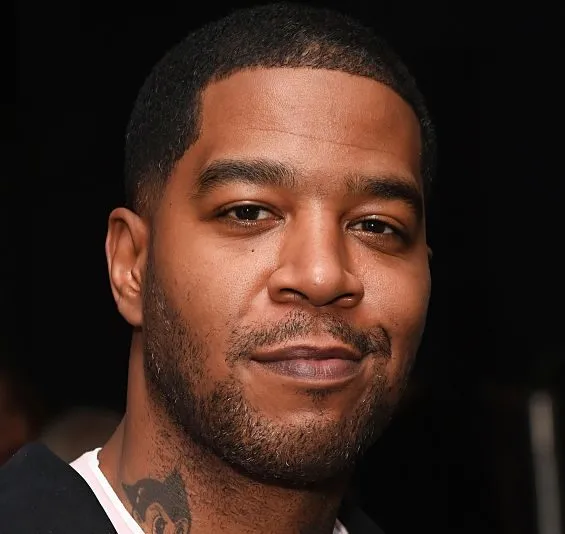
Kid Cudi is asking a California federal judge to throw out M.I.A.’s $2.8 million lawsuit, arguing that his decision to remove her from his Rebel Ragers Tour is protected by the First Amendment.
Cudi, whose legal name is Scott Mescudi, filed an anti-SLAPP motion in the U.S. District Court for the Central District of California. The case is being handled by U.S. District Judge Sherilyn Peace Garnett and is docketed as 2:26-cv-05768.
At the center of the dispute is M.I.A.’s removal from Cudi’s tour following a Dallas performance at Dos Equis Pavilion. Reports differ on whether the concert took place May 2 or May 3.

According to court-related reports, M.I.A., whose legal name is Mathangi “Maya” Arulpragasam, made comments concerning immigrants and visas during the show that drew boos from the crowd.
Cudi subsequently removed her from the tour.

The rapper has previously said he would not keep a performer on his tour if that person made offensive remarks that upset his fans. His latest court filing takes that position a step further, arguing that deciding which artists appear on a live performance is constitutionally protected expressive conduct.

Cudi’s attorney, Mathew Rosengart, is relying in part on a 2019 California appellate decision, Symmonds v. Mahoney, involving singer Eddie Money. In that case, the court held that selecting musicians for a live performance could qualify as protected First Amendment activity.
That argument forms the basis of Cudi’s anti-SLAPP motion.
California’s anti-SLAPP law allows defendants to challenge lawsuits arising from protected activity. If the challenge succeeds at the initial stage, the plaintiff must then demonstrate a probability of prevailing on the claims.

M.I.A.’s lawsuit accuses Cudi of inducing a contract breach and interfering with her business relationships. She alleges that Live Nation had guaranteed more than $2.8 million for her appearances on the tour.
Her complaint seeks $2.805 million in guaranteed fees, along with roughly $290,000 tied to an alleged lost private-party opportunity. She also claims losses involving merchandise, VIP offerings and licensing deals.
Live Nation is not named as a defendant.

M.I.A. has previously said she was canceled over multiple issues but did not expect consequences for being a Republican voter. Her attorney, Howard King, has also argued that she was “contractually allowed to say whatever she wanted on stage.”
King has not publicly responded to Cudi’s latest motion based on the supplied material.
Now the case turns to Judge Garnett. Her ruling on the anti-SLAPP motion will determine whether M.I.A.’s claims move forward into discovery — putting Cudi’s decision to remove her from the tour squarely under the legal microscope.
